Sheringham Point Lighthouse & the Road West
The 1912 tower standing watch over the Strait — and the wild, rewarding drive it takes to reach it.
No. 1 The Road Out
West of Sooke, the highway sheds its suburban fringe and becomes something genuinely wild. The road narrows, the trees crowd in, and occasional pull-offs reveal sudden, salt-stung views across the Strait of Juan de Fuca toward the snow-capped Olympic Mountains of Washington State. This is the Juan de Fuca corridor — less-visited than the harbour end of town, quieter, and worth every kilometre.
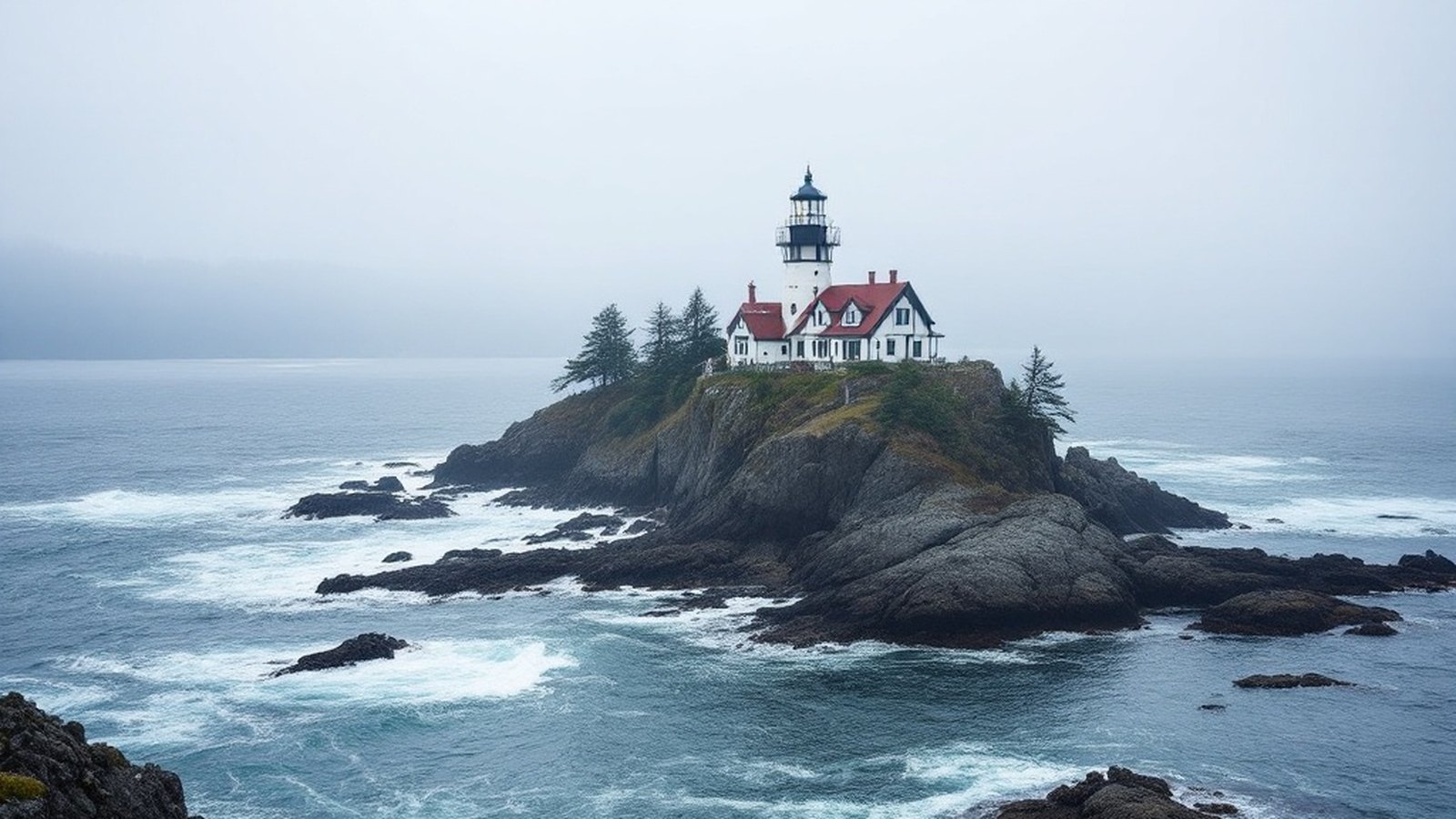
Sheringham Point sits roughly 25 kilometres west of Sooke, reached by a short gravel track off Sheringham Point Road. There is no grand approach. You round a bend through coastal scrub and the lighthouse simply appears: a white octagonal concrete tower, compact and purposeful, rising perhaps fifteen metres above a broad, sea-battered headland. On a clear day the views are extraordinary — the strait opening wide to the south, freighters in the shipping lane, and on winter days the kind of weather that reminds you the Pacific is not a polite ocean.
No. 2 The Light Itself
Sheringham Point Lighthouse was built in 1912 and first lit in 1913, commissioned to guide vessels navigating one of the busier and more treacherous stretches of water on the BC coast. Its design — a reinforced concrete tower integral with the keeper's dwelling — was a standard Department of Marine template of the era, practical rather than picturesque. The original Fresnel lens has been replaced by modern automated equipment, and the light has operated without a keeper since the 1980s, as did most Canadian lightstations when the federal government automated the system.
- 1912Lighthouse constructed by the Department of Marine
- 1913The light first operational, guiding traffic on a treacherous stretch of the strait
- 1980sStation automated; the last keeper leaves, as at most Canadian lightstations
What makes Sheringham exceptional today is its restoration. Local volunteers and heritage advocates worked for years to stabilise and repaint the structure, and the results are evident: the tower is in good condition and the headland grounds are open to visitors. A heritage plaque on site tells the station's history. There is no formal admission — you simply walk out.
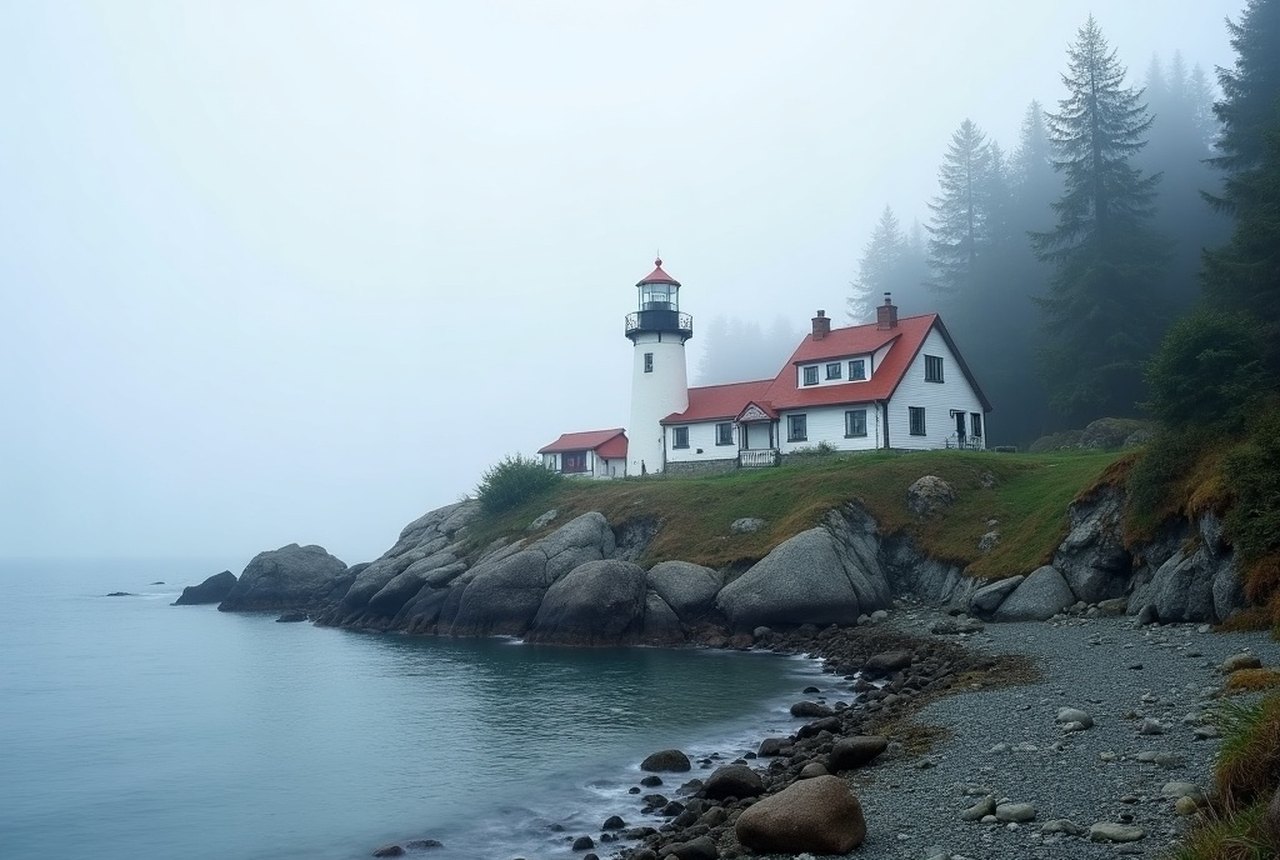
The Pacific is not a polite ocean.
The headland itself rewards a slow visit. Rough grass, wind-sculpted shore pines, and wave-polished rock shelves dropping to the surf. At low tide the intertidal zone below is rich with life — sea stars, chitons, and the kind of tide pools that keep children absorbed for an hour. Bring layers; wind is the constant here regardless of season.
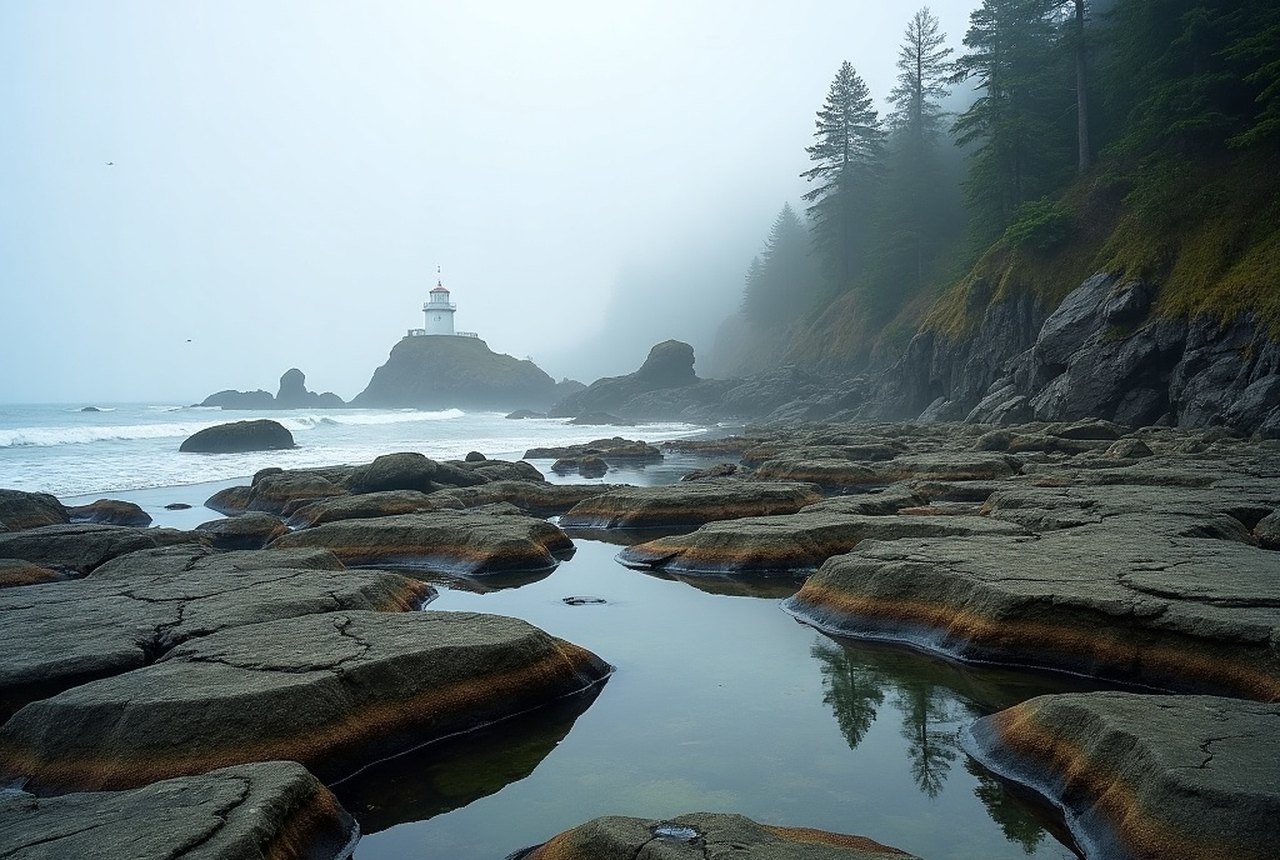
Combined with a stop at French Beach on the same drive, Sheringham makes for one of the most satisfying half-days on the entire Vancouver Island coast — remote-feeling without being remote, and genuinely beautiful without asking anything of you beyond showing up.