
Whales, Seals & the Salmon Run
The cold, food-rich waters off Juan de Fuca Strait make Sooke's coastline one of the best places on the coast to watch large marine animals — no boat required.
No. 1 What the Strait Brings In
The Strait of Juan de Fuca is a nutrient highway. Cold upwellings push feed to the surface, salmon crowd the nearshore, and larger predators follow. From the headlands of East Sooke Regional Park or the vantage at Sheringham Point, patient watchers regularly spot grey whales on their spring migration north — travelling close to shore, blowing steadily as they pass. Resident orca pods move through less predictably, often trailing the same chinook salmon runs that draw sport anglers to the harbour.
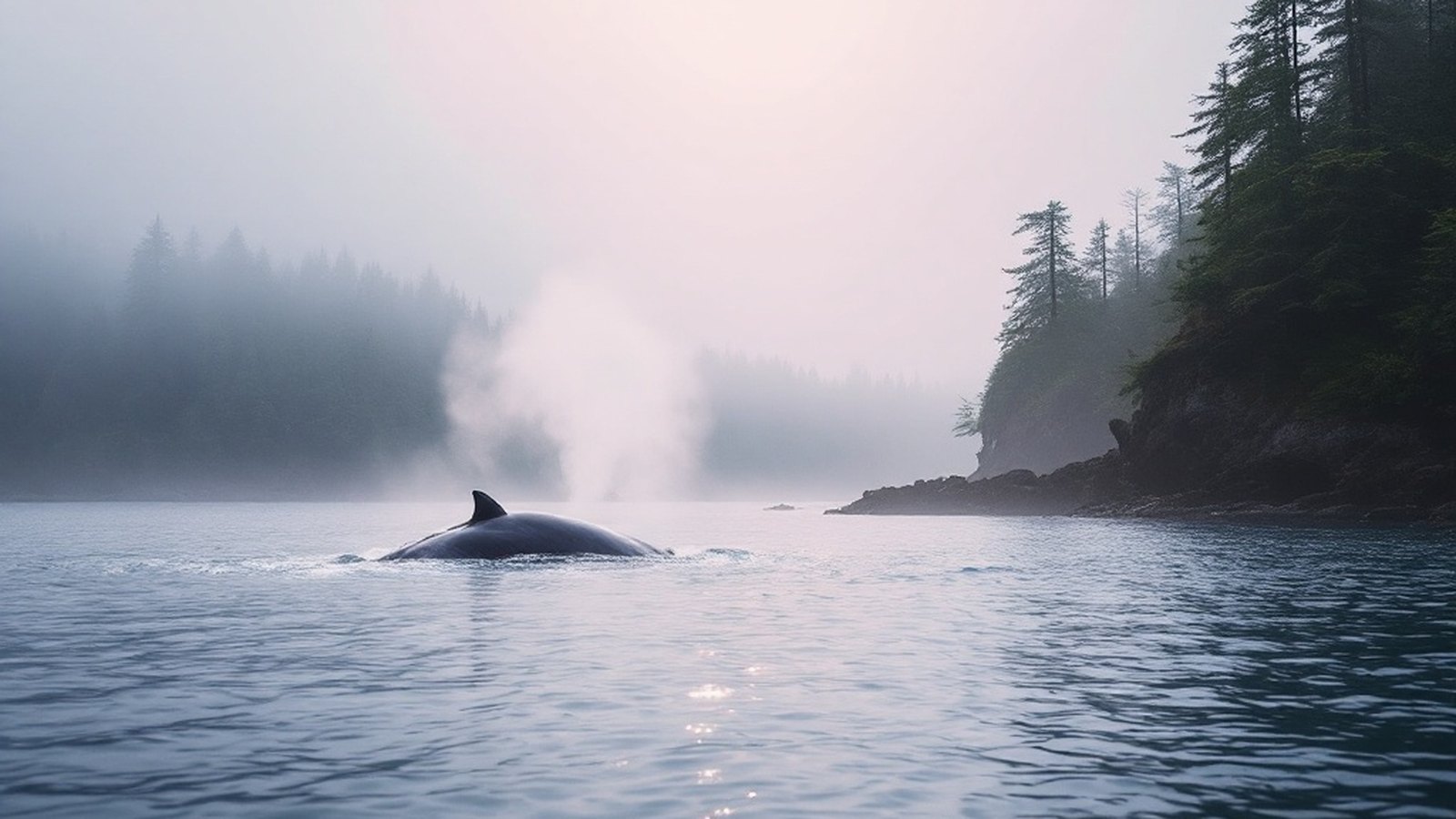
Harbour seals are the coast's permanent residents — loafing on rocks near Whiffin Spit, porpoising alongside kayaks in Sooke Basin, and hauling out in numbers near the harbour mouth. Steller sea lions, substantially bigger and louder, appear seasonally, often congregating near Race Rocks Ecological Reserve to the east, where the tidal rip concentrates prey year-round. Race Rocks supports one of the densest concentrations of marine mammals on Canada's Pacific coast.
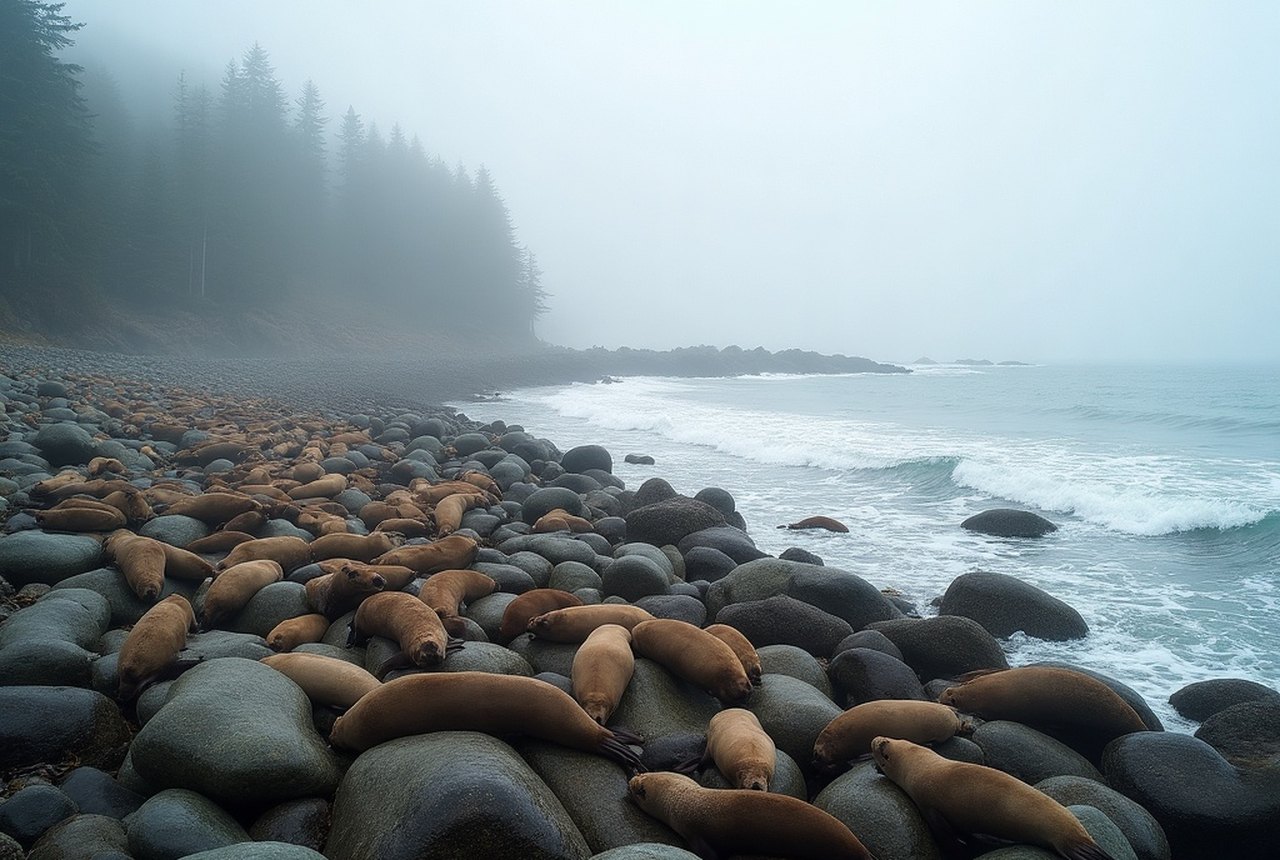
The salmon runs tie everything together. Chinook arrive first in summer; coho follow into autumn. Their presence pulls seals, sea lions and transient orcas into the same nearshore zone, compressing the action into waters visible from shore. Even the Sooke River mouth draws wildlife attention as fish stage before pushing upstream. You don't need a charter to see something remarkable — a decent pair of binoculars and an incoming tide will do.
You don’t need a charter to see something remarkable — a decent pair of binoculars and an incoming tide will do.