Sooke's Salmon-Fishing Heritage
The salmon runs off this headland drew Indigenous fishers for millennia — and they still pull sport anglers from across the continent.
No. 1 A Shore Built on Fish
Long before the first canneries appeared on the Strait of Juan de Fuca, the T'Sou-ke Nation built a way of life around the salmon runs that surge past this headland each year. Chinook, coho, sockeye — the races were predictable, generous, and bound to every aspect of T'Sou-ke culture and subsistence. The fish were the economy long before anyone called it that.
The fish were the economy long before anyone called it that.
European settlement brought nets, then canneries, then a commercial fleet that worked Sooke Harbour and the open strait through the late nineteenth and early twentieth centuries. The runs were staggering by modern reckoning. Sooke Harbour became a staging point for boats heading out to deeper water, its working waterfront shaped almost entirely by what the sea gave back.
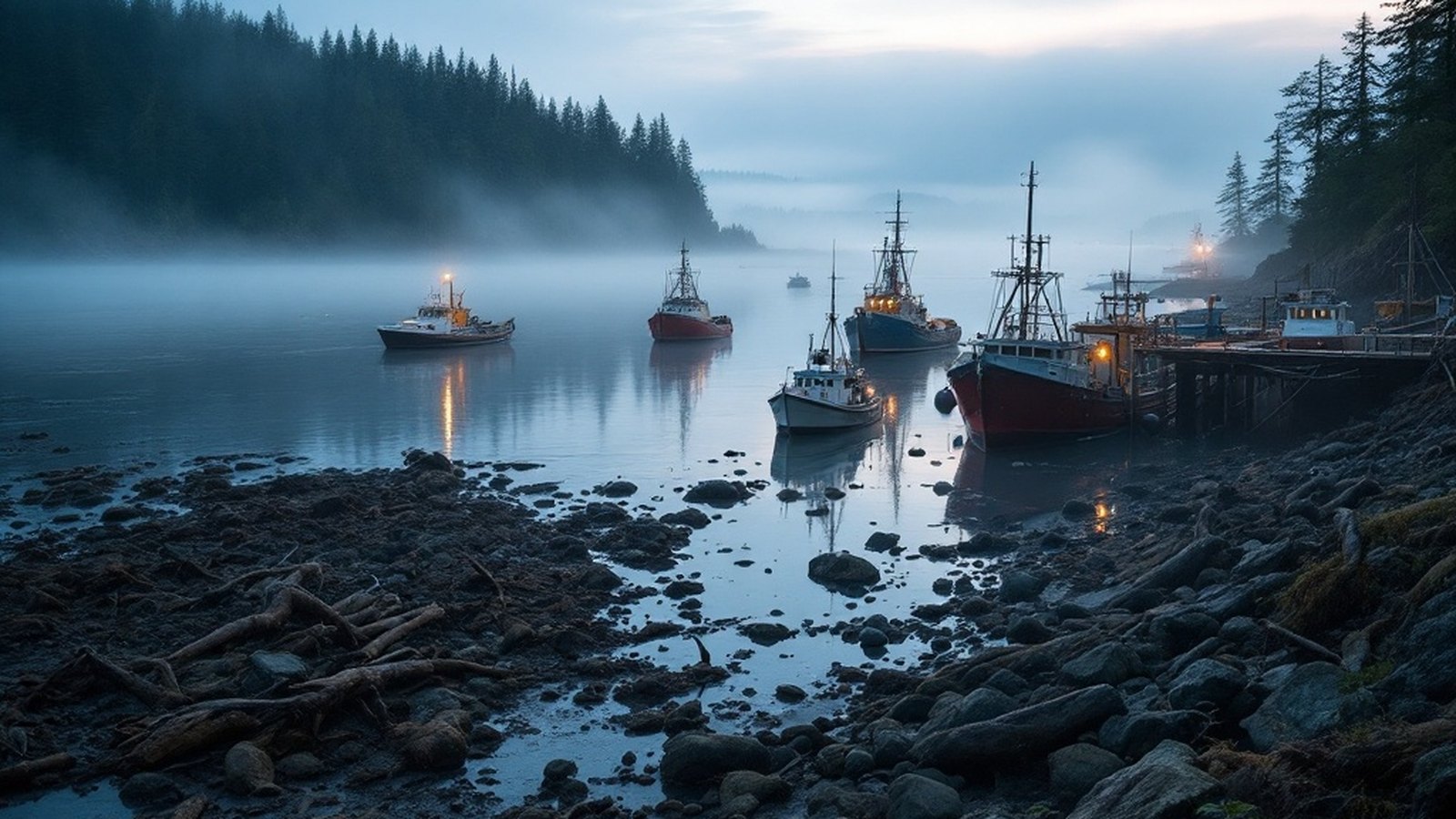
The sport-fishing tradition grew from that commercial culture. By the mid-twentieth century, Sooke had established itself as one of the premier salmon-charter destinations on Vancouver Island's south coast, prized for its proximity to the deep, cold upwellings along the strait and the reliable late-summer Chinook run that draws anglers hoping for a truly big fish. Word spread, and guides started booking clients from Victoria, from the mainland, eventually from as far as the American midwest.
Today the charter fleet still works out of Sooke Harbour, targeting Chinook through the warmer months and coho into autumn. Regulations have tightened considerably as stocks have come under pressure — catch limits, gear restrictions, and periodic closures are part of fishing here now, as they are everywhere on the Pacific coast. Most guides operate barbless, release-first rigs as a matter of routine. The fish still come, in numbers that would have seemed modest a century ago but remain genuinely thrilling on the water.
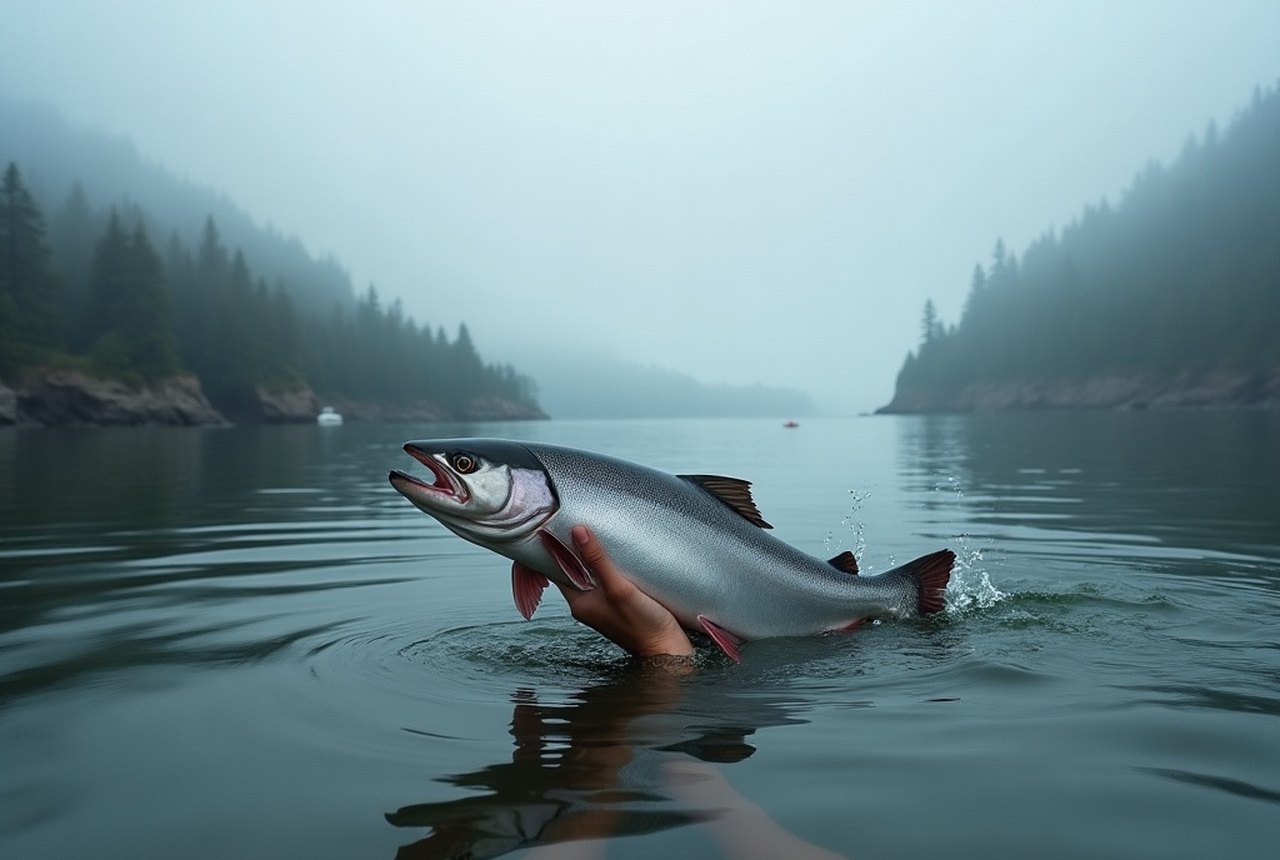
That long relationship between this town and its salmon — harvested, depleted, cautiously tended — is one of the most honestly human stories the coast has to tell.